I participated in the FODE Symposium (22 – 23 October 2026). Disrupting Online Learning Futures: Human-Centred Innovation in the Age of Intelligent Education. The opening keynote clashed with my daughter’s 18th birthday breakfast. We went to De Babab Eatery, so I was not completely present. I did however use the conference videos to catch up. You too should be able to watch what I (and other presenters) said.
My presentation was sub optimal (dark zoom, WiFi was patchy), but the materials and thoughts seemed good (article about the keynote speaker, interactive map of all participants, summary of the conference series). I’m kinda pleased about that. The reification of the lecture (and content) through ZOOM, Teams etc has let to Big Tech’s failures. It leads to “verschlimmbesserung”, or “en…fication” (thanks Cory).
There were academics, learning designers, instructional designers, e-learning specialists online facilitators and educational technologists at the event. I was the only Wikipedian there. Perhaps that’s why my computer decided to update itself at a most inopportune time.
The Presentation (I would have like to give)
Here is my brief presentation script, which might (or might not) have worked if I was in a better zone!
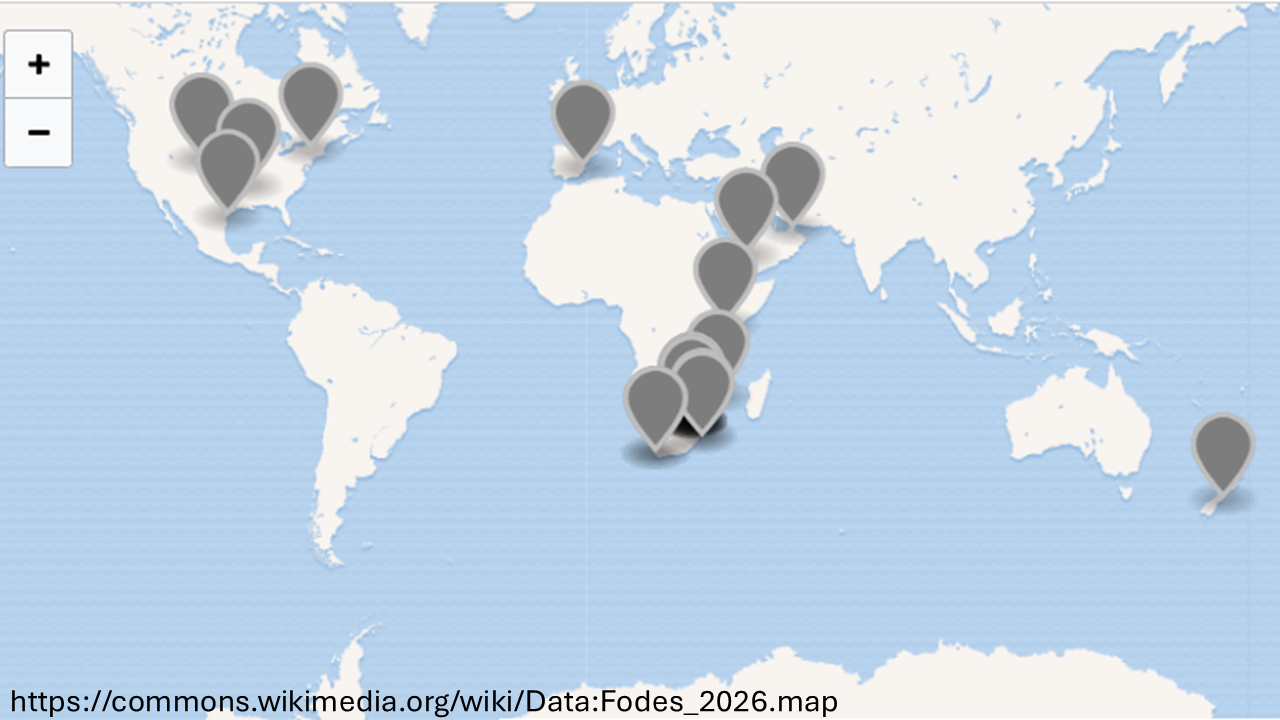
Slide 1 – A map of our territory
I love the way that our keynote speaker (Katheryn) started the presentation off with a map. It allowed me to locate her. The pictures that she used to represent herself were remote ones, a few family scenes. She drew on relations, children, futures and tech. It is in remote places where fully online distance education (FODE) makes total sense and knowledge is developed in relation to others. I drew a map back (of all participants).
Action: Look at the FODES Wikipedia Map
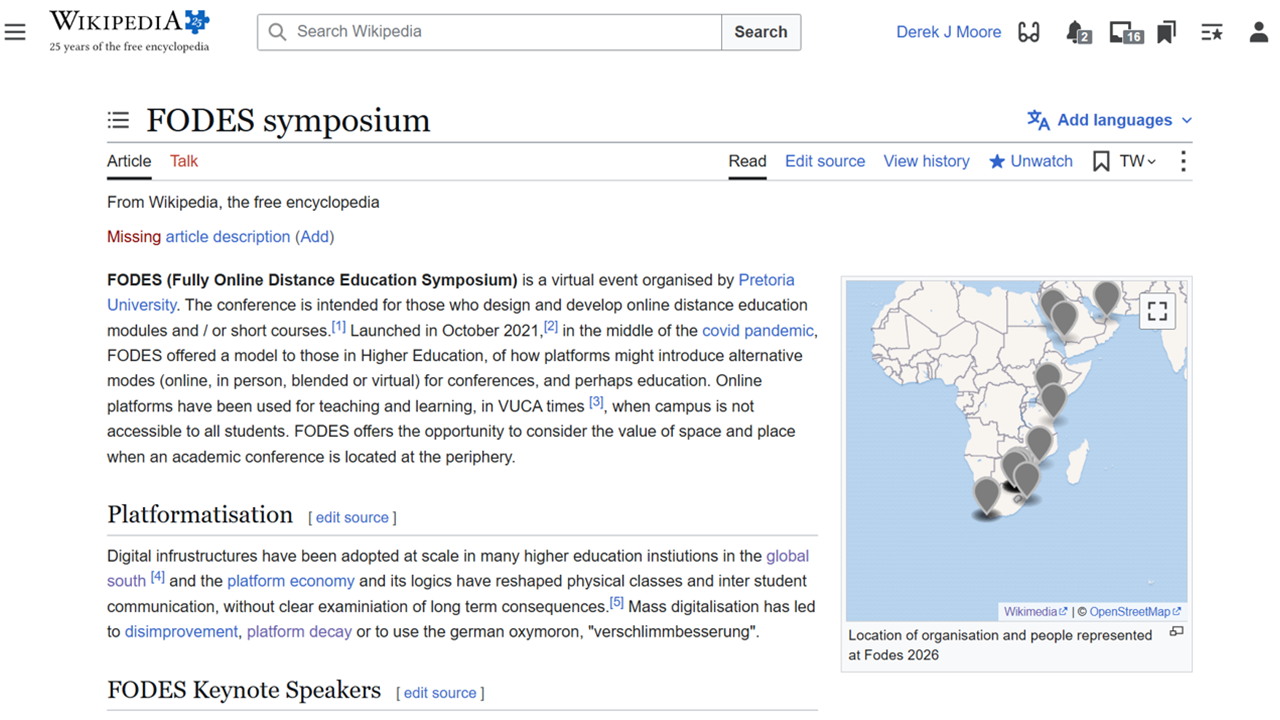
Slide 2 – A platform for knowledge
I dislike the way that higher education has reified the lecture and made content the king. I question the assumption that there is one authority who provides all information. Zoom magnifies this assumption. We arrive, quietly listen and then leave. Those who do this remotely, do this for many years. Can we do better?
Action: Go to Wikipedia and create an account to edit Wikipedia
Slide 3 A gap in understanding
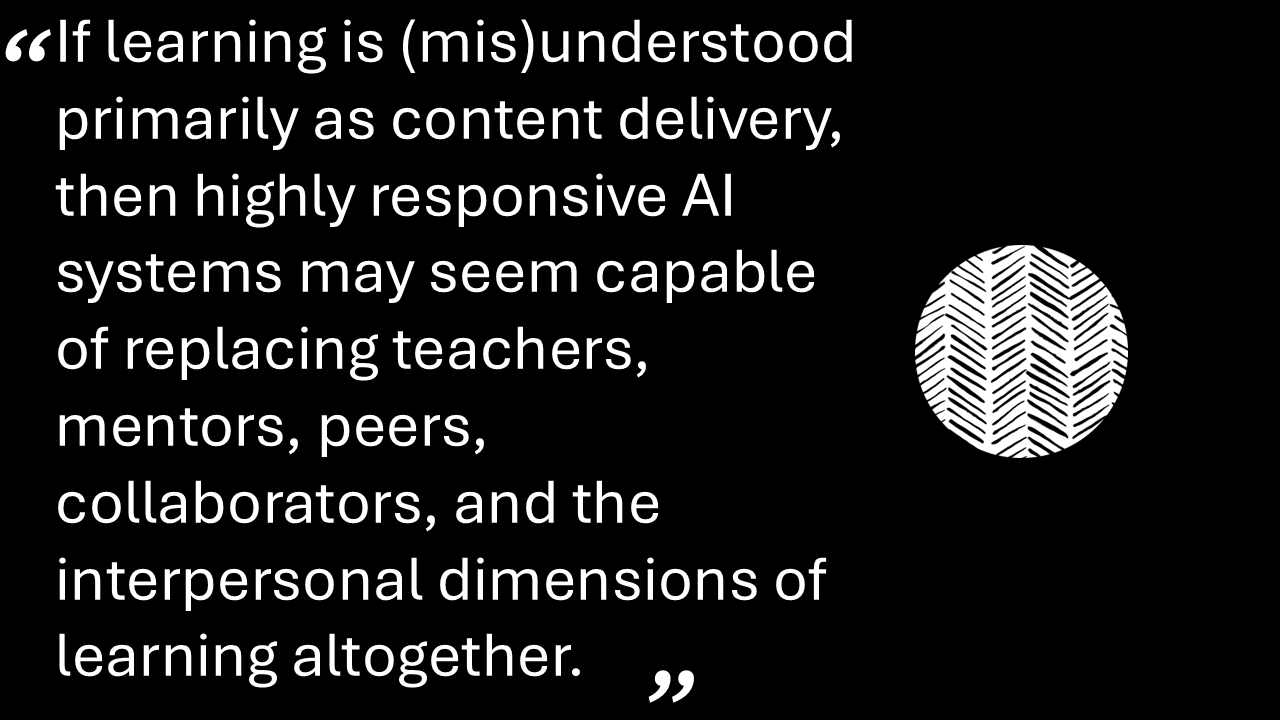
Action: This quote is from a MIT report (see below). Think about this conference. Think about the quote. Has this conference allowed you to form an identity, exercise your judgment about AI? THINK! don’t google. THINK!
Slide 4 Passive or active learning?
However, if “…education is understood as a cultural practice through which students learn to make meaning, exercise judgment, form identities, and participate responsibly in community”. Then we cannot just sit there and listen. We also have to do!
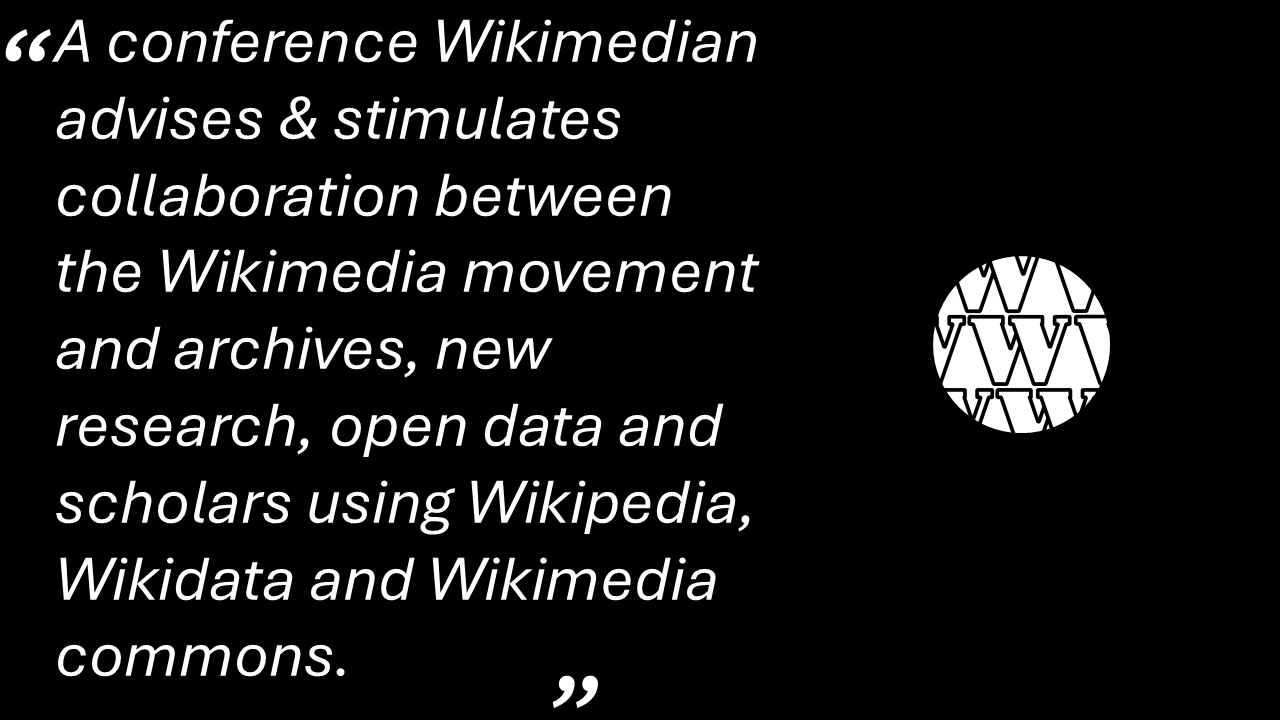
Action: Go to Wikimedia Commons and see if there is an image about one of the presentationtopics (or a presenter) Choose a diagram captures its essence or select a significant speaker and upload these image to Commons. Remember they need to be openly licensed.
Slide 5 Getting unstuck
Many have been forced to choose new paths when it comes to higher education. After the disruptions of “Fees must Fall” and pivot that came with the pandemic, it has become more normal to learn online and at a distance. But lectures mode (sage on the stage) still remains.
Action: Are you still stuck in bubble. Can you connect to people with other ideas? Could you be a Conference Wikipedian? Go to the FODES talk page and write down your thoughts
Slide 6 Adapt my pitch
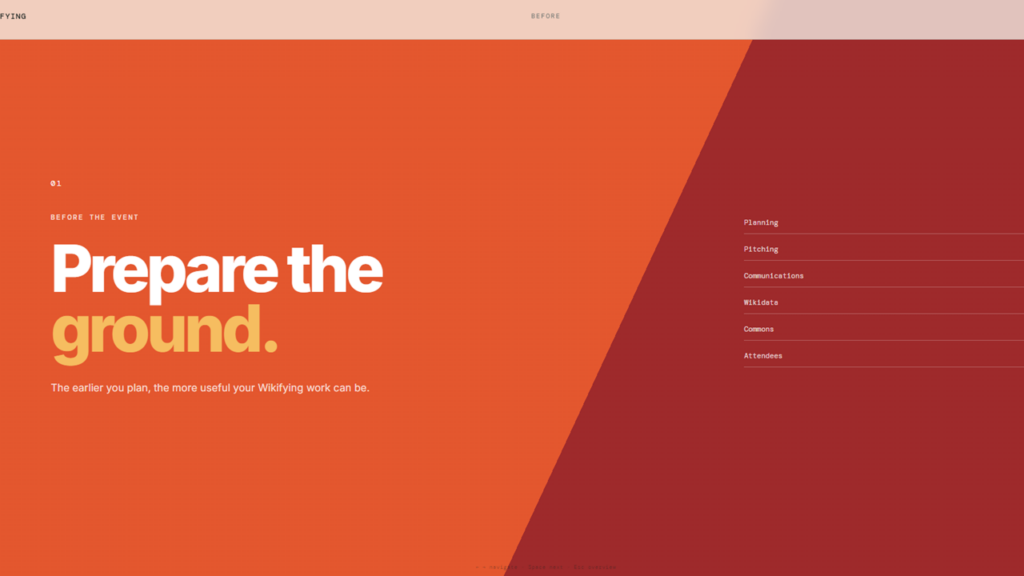
Some conference providers (like FODES) have consolidated their understanding of the different benefits and challenges the remote conference. But they have not yet managed to break free from content delivery paradigm. Wikification asks you to be deliberate. To think before. What will we do differently. To consider during. How can we challenge entrenched patterns of behaviours. To reflect afterwards and then turn our reflections into action and experience.
Action: Find this before, during, after presentations on Codepen. Fork it and modify
Slide 7 Make it yours
Digital is (for better or worse) pervasive. It matters less where the conferences happens, and more how you can connect to people. Ultimately, conferences are a knowledge hub. And when there are more knowledge hubs and you can make different connections between people in different hubs, and express those connections. That’s when you start to really learn
Action. Add a sentence to the current wikipedia stub about FODES about something notable in the event. Remember to reference it.
Slide 8 Five star teatment
There are five “aspects” of a conference
- Time, – synchronous (live, shared time) and asynchronous (independent, own time)
- Space – my office on zoom, a fancy conference venue at a remote location, a shared room
- Place – In places like Zoom on your phone on your laptop, or in a Virtual Spaces (XR, VR, AR, Immersive reality)
- Roles and relationships – keynote speaker, host, attendee
- Materials – Yes, SWAG is nice. But we also need a hub for storing re-arranging and sharing new knowledge! Where hub where you go to make meaning
Action 8: If someone had to search for FODES on Wikipedia. What would they find? Time, space and place of the conference? Or the materials you shared and the notable people there.
Slide 9 Lets enrich our shared knowledge
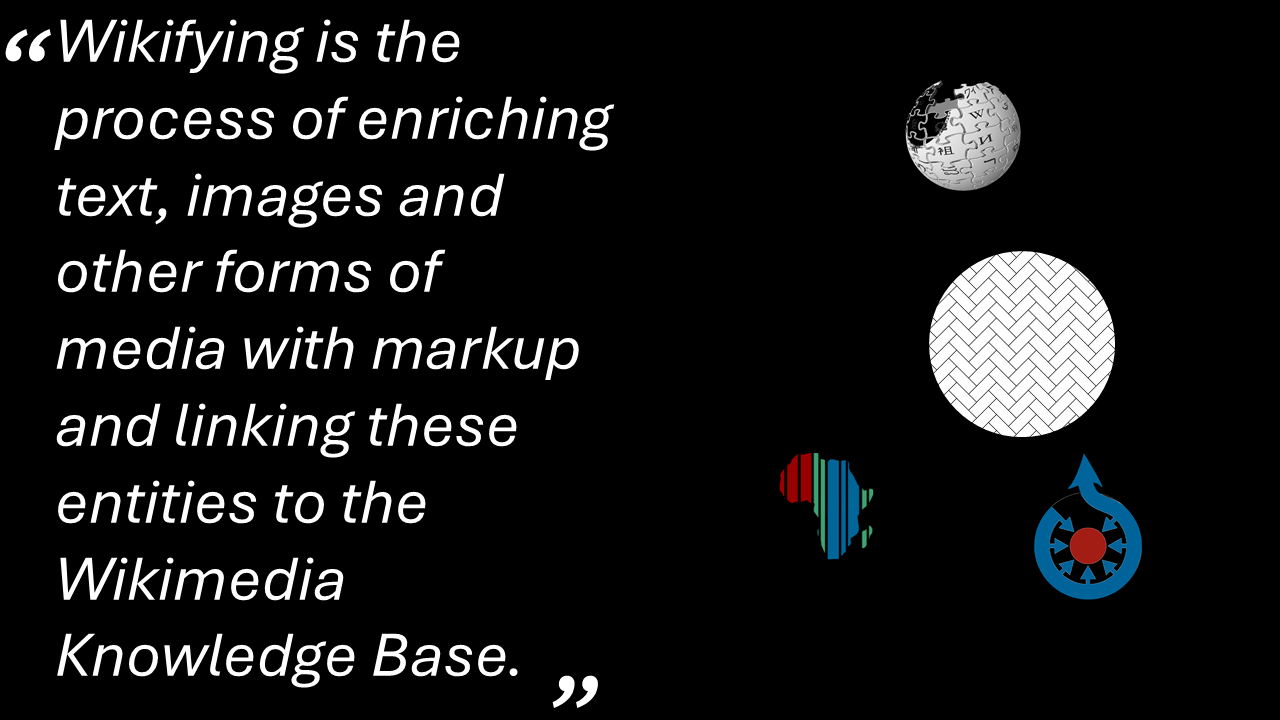
Wikification is where point 5 begins. The materials that are placed on Wikipedia and Wikimedia Commons become open to all. The relationships between these materials are created through Wikidata. These sharing become the basis for our learning. Then as a result of the materials, the roles and relationships. the rest (the time, space place) make it possible to earn together
Action 9: Arrange these materials using categories, images, maps, charts, diagrams, headings. Use the tools on Wikimedia at your disposal.
Slide 10 Recap
Conclusion. You saw how we got together at 13:20 (time), on dark Zoom with no presentation (space). You went to the FODE Symposium page, and perhaps you clicked on the map labels (place). You also might have noticed a gap. Did you ignore that. Or did you actually start adding to the materials (or did it together with someone). Was there was an aha moment? A spark? That’s when you started to learn.
Possible Deletions?
This Wikipedia conference entry might be deleted by an anonymous editor. There is contestation in Wikipedia (and higher education). So do take care with the archive and say share your thoughts about why this article should remain on Wikipedia
PS This presentation and the conference video do not correspond. My tech gave up on me just as I was about to present! So I had to do things on the fly.
References
Beetham, H., MacNeill, S. and McGill, L (2026) Beyond blended: rethinking curriculum and learning design
MIT (2026) AI Use in Teaching, Learning, and Research Training
Mike & Tamsin (2026) Wikifying a Conference
Saridi, M., Mahdaviani, K., Milios, E., & Zeh, N. (2023). Context-enhanced concept disambiguation in wikification. Intelligent Systems with Applications, 19, 200246.
Witten, I.H. (2010). Wikipedia and How to Use It for Semantic Document Representation. In: Yu, J., Greco, S., Lingras, P., Wang, G., Skowron, A. (eds) Rough Set and Knowledge Technology. RSKT 2010. Lecture Notes in Computer Science(), vol 6401. Springer, Berlin, Heidelberg. https://doi.org/10.1007/978-3-642-16248-0_5