Please note that I first published this piece about the Digital Humanities conference on Substack in December 2023. Meant to post it to my blog, but I didn’t. I have also made a few Grammarly corrections.
Introduction
My first in-person conference since 2020. Yes, it was so good to be back with people (not screens). Appropriately, the DHASA conference theme was “Digital Humanities for Inclusion”—the conference aimed to foster growth and collaboration in the digital humanities (DH) field.
Keynote Presentations
The conference offers researchers interested in showcasing their work in the broad field of Digital Humanities a forum to connect with their colleagues, fellow researchers, and peers. I am new to this community and enjoyed keynote addresses by
- Rory du Plessis – “A unit of data or a human subject? The inclusion of marginalised voices and humanising stories from digital archives”.
- Alette Schoon – “Foregrounding the human in the time of AI: What do we mean by inclusive digital humanities?”
- Karabo Maiyane – “The responsible use of AI in digital humanities practices.”
Open Seeds Panel discussion
I was a member of a panel, along with Henri-Count Evans, Alette Schoon, and Mmasibidi Setaka, where we discussed our experiences with Open Seeds, where Harini had mentored.
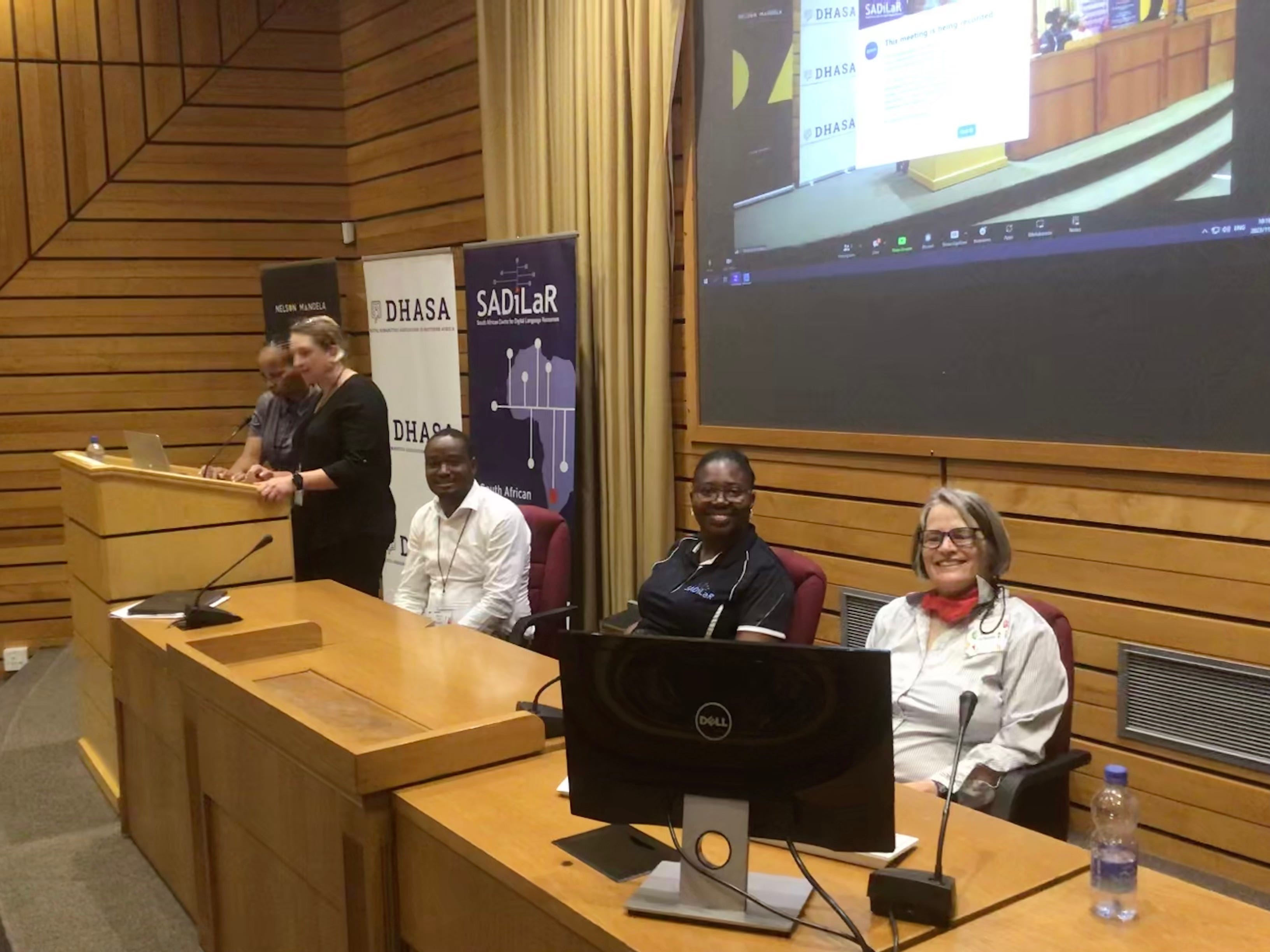
This was a 16-week mentoring and training program based on the Mozilla Open Leader program. It’s for those interested in running their own open leadership program. The combination of mentorship and cohort meetings has kick-started Open Umbrella (https://weblearning.co.za/umbrella/) work. I have wanted to expand on it for years. Open Seeds has helped me to put things into action. By
- sharing essential knowledge required to create, lead, and sustain an Open Education project.
- Connecting different communities, backgrounds, and identities across the globe, where many have freely shared their experiences and expertise.
- Empowering me to become a better Open Education ambassador in my community.
Workshops – Autshumato ITE
DHASA is also about empowering participants in open technology. I enjoyed Thursday’s workshop, where we were introduced to Omegat (https://omegat.org/), a free and open-source multi-platform Computer Assisted Translation tool with fuzzy matching, translation memory, keyword search, glossaries, and translation leveraging.
In the workshop, we were introduced to computational methods to assist translation activities. By the end of the session, we were able to utilise it as a tool for translating on their laptops.
Last Words
Back home at my desk after an intense and stimulating week. Both exhausted and very pleased. Thanks to all from Escalator (https://escalator.sadilar.org/) who made this week possible.


The 2025 edition promises to be even more awesome.
So pleased to hear that Johannes DH 2025 is going to be happening. Perhaps we need to show people how to create a Wikidata number and share their research with the world?